Evaluate Physical Attacks
Clarify how fault injection and side-channel leakage threaten lightweight cryptographic hardware.
We study secure and practical implementations of lightweight cryptography for resource-constrained IoT devices, with a focus on fault analysis, power-analysis countermeasures, and real-world secure applications.
As a growing variety of IoT devices connect to networks, security must be considered even for small and resource-constrained systems. Cryptographic protection is essential, but conventional algorithms may impose excessive circuit area, power consumption, or processing latency on compact embedded devices.
Lightweight cryptography addresses this problem by providing cryptographic algorithms designed for small circuit size, low power consumption, and low latency. Although these algorithms are designed to provide computational security, implementation-level attacks such as fault analysis and power analysis can still expose secret information.
Our research on lightweight cryptography security modules is organized into three parts: fault analysis, power-analysis-resistant implementations, and secure IoT applications. Together, these studies cover both attack evaluation and practical protection.
Clarify how fault injection and side-channel leakage threaten lightweight cryptographic hardware.
Improve tamper resistance while preserving the small circuit size and low power required by IoT devices.
Implement lightweight cryptography in real IoT systems and measure security, communication overhead, and latency.
Fault analysis intentionally introduces computational errors into a cryptographic device and uses both correct and faulty ciphertexts to estimate the secret key. In this study, we propose a fault-analysis method for the lightweight block cipher LTLBC.
The assumed fault-injection method is clock glitching. A shortened or disturbed clock pulse can cause setup-time violations in flip-flops forming the data register and can introduce multiple bit faults. Because the clock signal is distributed to many flip-flops, it is difficult to precisely control the fault location and number of corrupted bits.
If setup-time violations occurred in every flip-flop, each bit could exhibit one of four transitions: 0→0, 0→1, 1→0, or 1→1. Two of these four transitions invert the bit, suggesting a theoretical fault probability of 1/2. In practical hardware, however, signal propagation delays differ across internal paths. Setup-time violations therefore occur only in part of the register, and the actual fault probability is generally lower than 1/2.
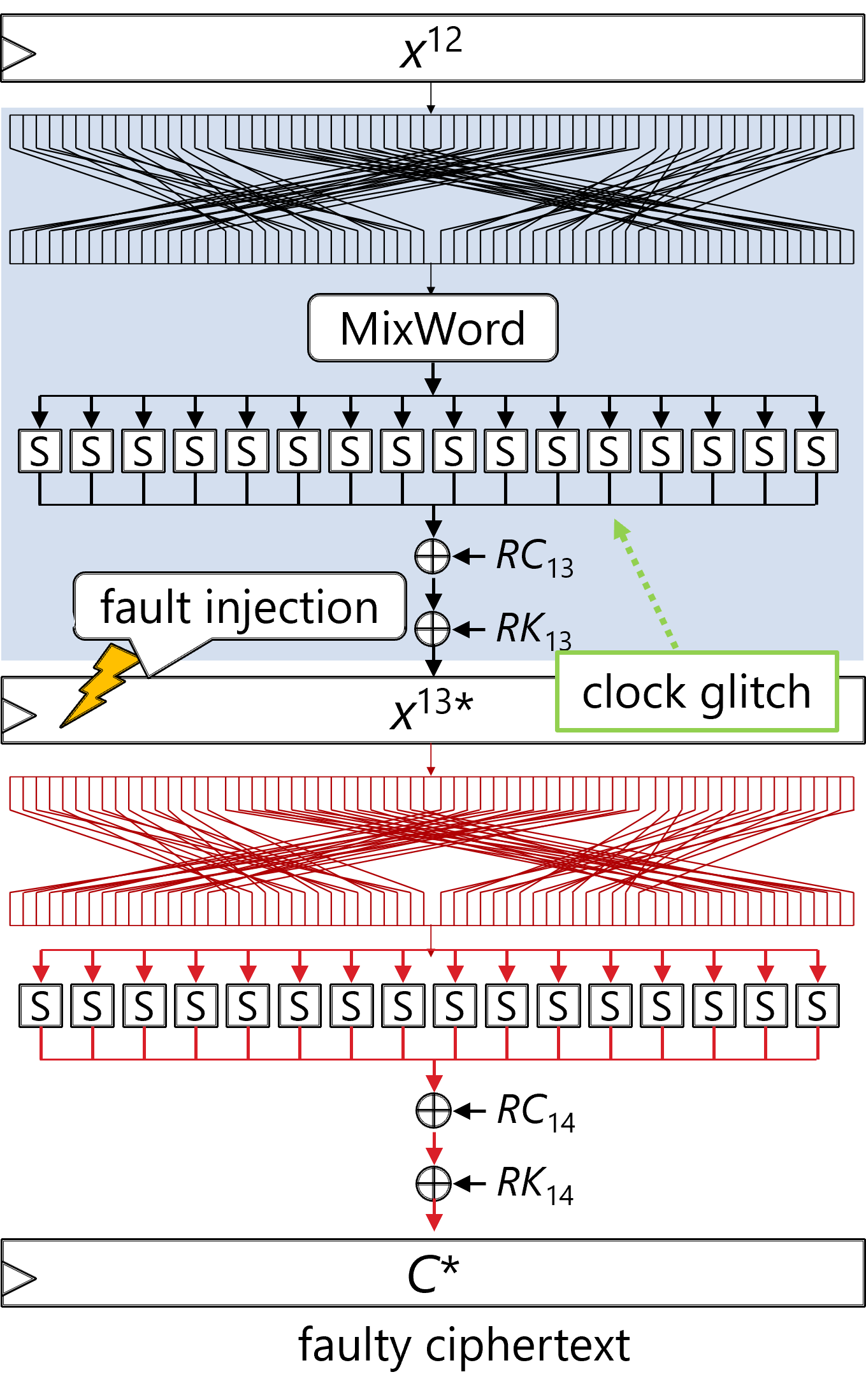
Figure 1 shows the fault model. A clock glitch is injected during the 13th round. Multiple faults are introduced into the data register at the end of that round. The faults are then diffused by the 14th-round processing, producing a faulty ciphertext.
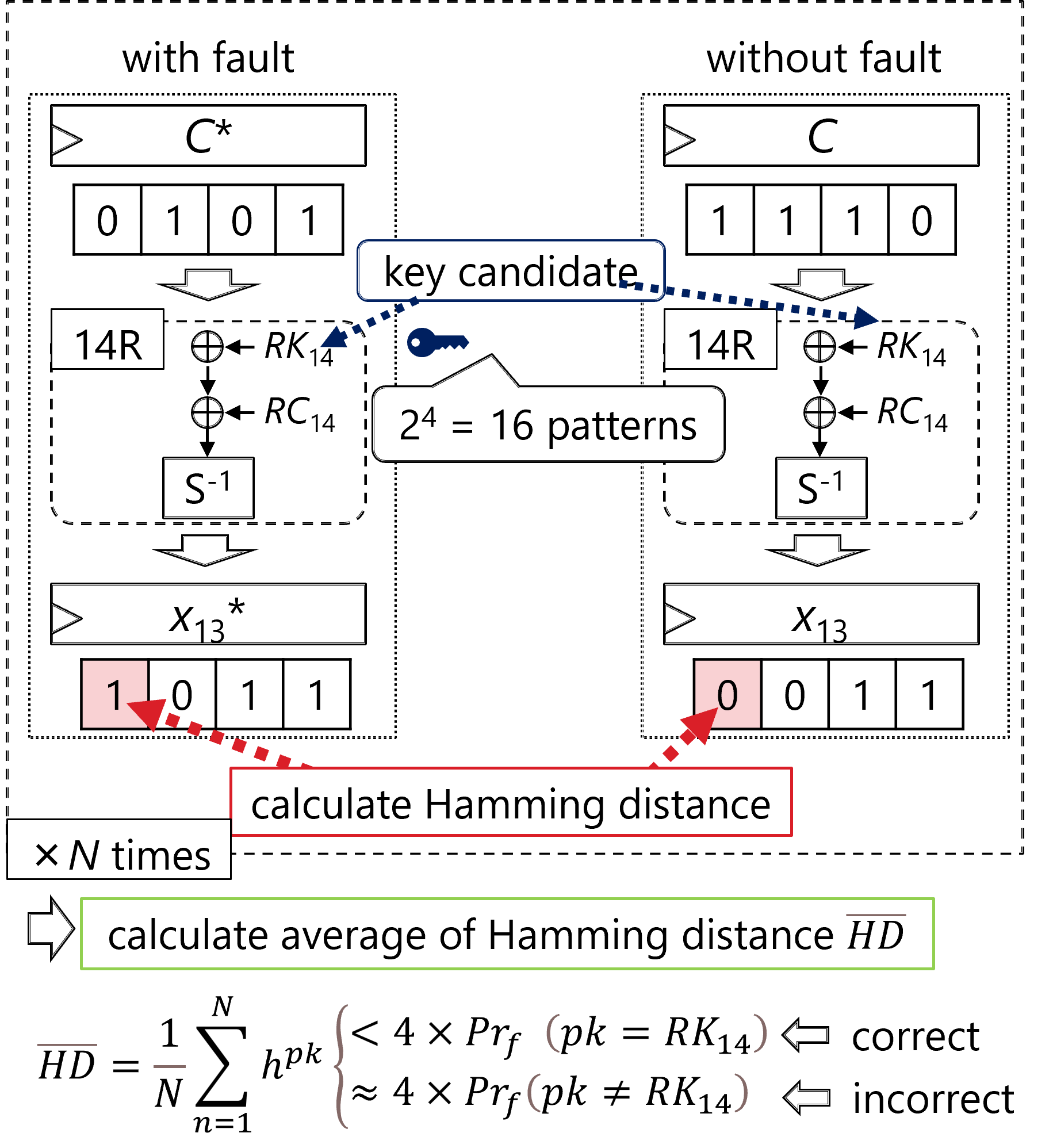
The proposed method prepares multiple pairs consisting of a correct ciphertext C and a faulty ciphertext C*. For each ciphertext pair, the intermediate value at the end of Round 13 is calculated. The value derived from the correct ciphertext is denoted by x13, while the value derived from the faulty ciphertext is denoted by x13*.
For each candidate round-key value pk, the method computes the Hamming distance between the two derived intermediate values. If the key candidate is correct, the Hamming distance reflects the actual number of injected faults. If the key candidate is incorrect, the Hamming distance is expected to approach 2, which is the expected value for a random 4-bit difference.
The average Hamming distance is calculated over N ciphertext pairs, and the candidate with the smallest average is selected as the estimated key.
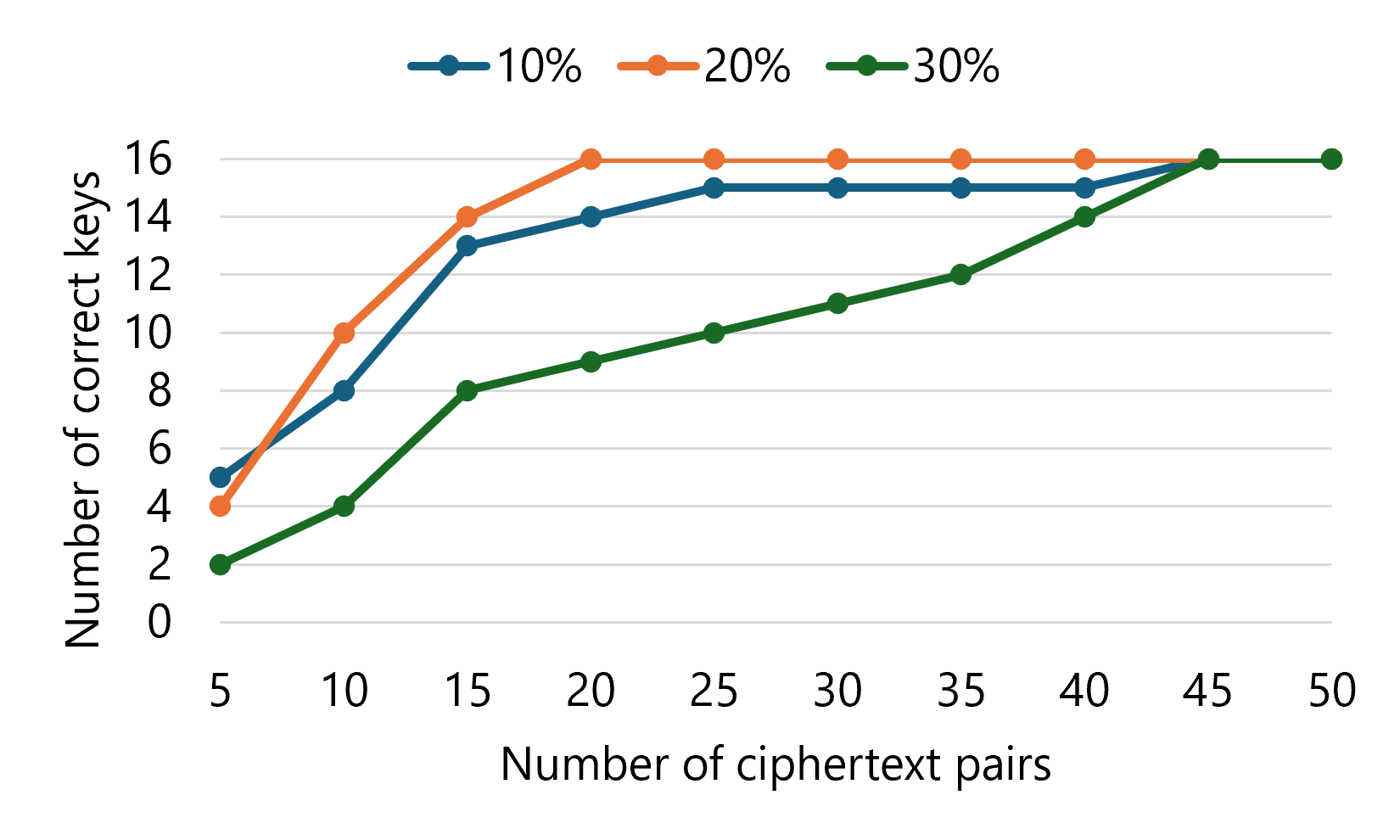
The analysis was evaluated with fault-injection probabilities of 10%, 20%, and 30%. As shown in Figure 3, all target keys were successfully recovered when at least 45 ciphertext pairs were used, regardless of the evaluated fault probability.
The method does not require precise control of a single fault location.
Averaging Hamming distances separates the correct candidate from incorrect candidates.
Complete key recovery was achieved with 45 or more ciphertext pairs in all tested cases.
This research develops a tamper-resistant implementation of the lightweight cipher Midori128. The proposed method is based on Rotating S-boxes Masking (RSM), originally proposed by M. Nassar and colleagues for AES.
RSM hides the correlation between cryptographic intermediate values and side-channel information by introducing randomized transformed S-boxes. Conventional masking often requires multiple transformed S-boxes corresponding to different random values. RSM reduces the circuit overhead by rotating and reusing transformed S-boxes.
Directly applying the original AES-oriented RSM method to Midori128 is difficult because the S-box structures differ significantly. In AES, transformed S-boxes can be generated mainly by considering the mask value used in the data register.
In Midori128, the SubCell operation is formed by the 4-bit Sb1 structure together with surrounding permutations. Constructing transformed versions of the larger 8-bit structures SSb0, SSb1, SSb2, and SSb3 would require mask processing that also accounts for these permutations, leading to a complex circuit.
To solve this problem, the proposed method applies RSM to Sb1, the smallest 4-bit unit used to construct the Midori128 S-box.
Figure 4 shows the proposed architecture. Random masking is applied not only to the data-register values but also to all intermediate values during encryption. The mask hides the correlation between secret-dependent intermediate values and measured power consumption.
Because Sb1 processes 4-bit data, the proposed implementation uses 4-bit mask values. This design helps preserve the lightweight nature of Midori128 while improving resistance to power analysis.
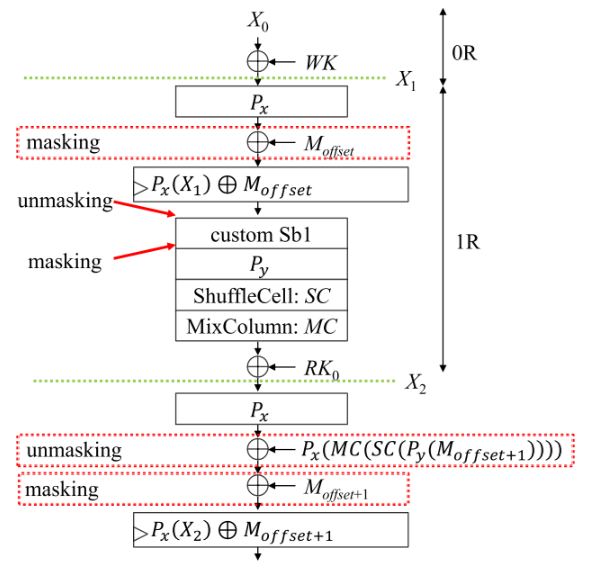
Figure 5 shows the detailed transformed Sb1 structure. It consists of two shifter circuits and 32 Sb1′ components. This structure enables masked processing and reuse while controlling hardware overhead.
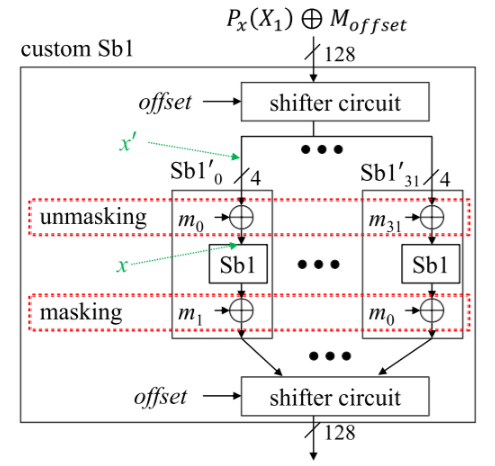
Figure 6 shows the measurement environment. A total of 50,000 power traces were collected with an oscilloscope and used to evaluate the tamper resistance of the implemented Midori128 circuit.
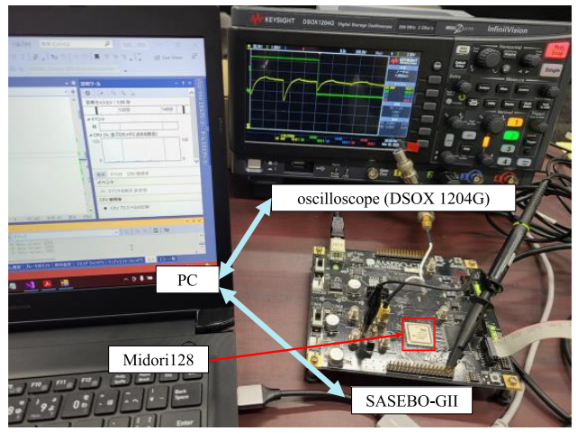
Figure 7 compares the unprotected and protected implementations. All key bits of the unprotected circuit could be recovered using 10,000 traces. In contrast, the proposed protected implementation revealed zero correct key bits even when 50,000 traces were used.
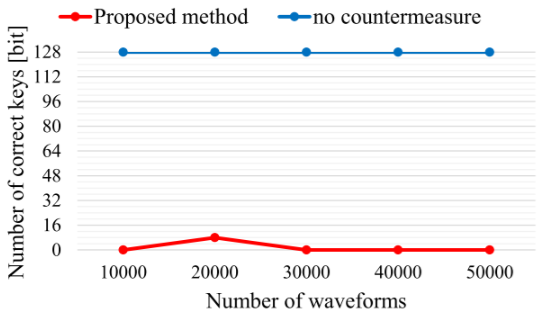
The unprotected implementation was fully analyzed with 10,000 traces, whereas the proposed RSM-based implementation yielded 0 recovered key bits even with 50,000 traces.
RSM is adapted to the native 4-bit Sb1 structure of Midori128.
Rotating and reusing transformed structures avoids excessive circuit expansion.
The protected implementation resisted the evaluated power-analysis attack.
Smart factories require real-time control because production speed and system responsiveness directly affect operational efficiency. Lightweight cryptography is therefore attractive as a means of providing security with low latency.
Ascon was selected as a standard lightweight cryptographic algorithm and is expected to be deployed widely in industrial systems. Evaluating Ascon in realistic IoT environments is therefore important for understanding both its security benefits and implementation overhead.
In this study, we constructed an IoT system using myCobot, which was described in 2023 as one of the world's smallest and lightest robot arms. We investigated its standard control and communication methods and implemented secure communication using Ascon.
Figure 8 shows the system overview. The robot arm is a myCobot 280-Pi containing a Raspberry Pi 4 Model B as its control computer. A server computer and the robot-arm client are connected to the same local-area network and communicate through Wi-Fi.
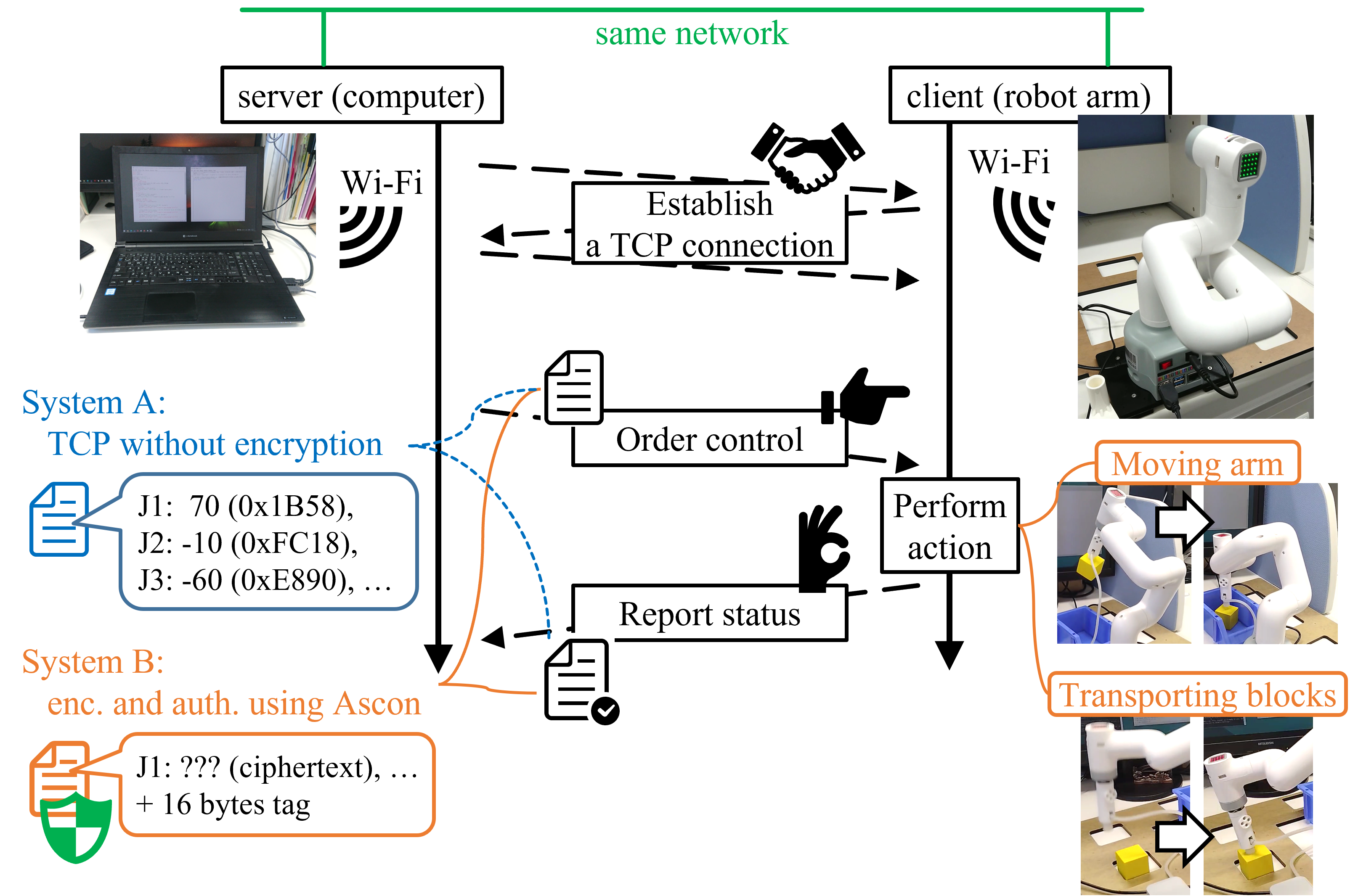
Figure 9 shows packets observed on the wireless network. In the left example, a server sends 47 bytes of robot-pose information to the client. The client then returns operation-completion information to the server.
Because these packets were transmitted without encryption, their payloads could be read by a third party. The right example shows a packet protected by Ascon. The payload is encrypted, preventing an observer from learning the robot's pose information.
The packet length increased from 47 bytes to 63 bytes. The additional 16 bytes correspond to the Ascon authentication tag. Verification of this tag also protects the system against message modification and impersonation.
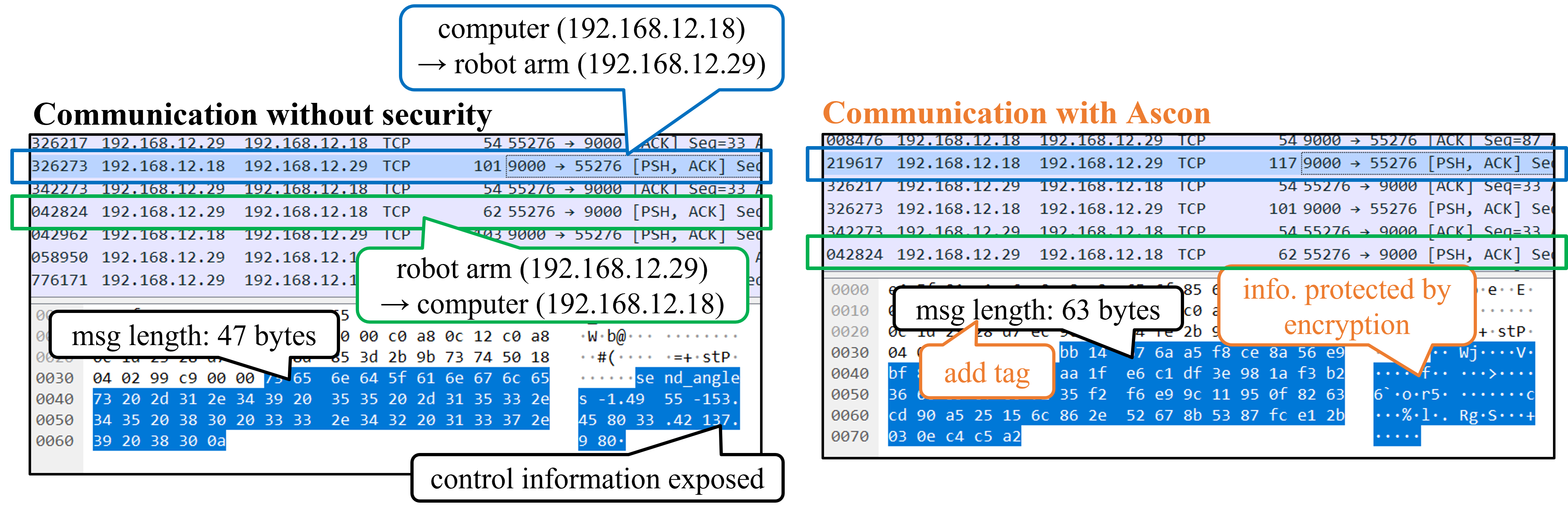
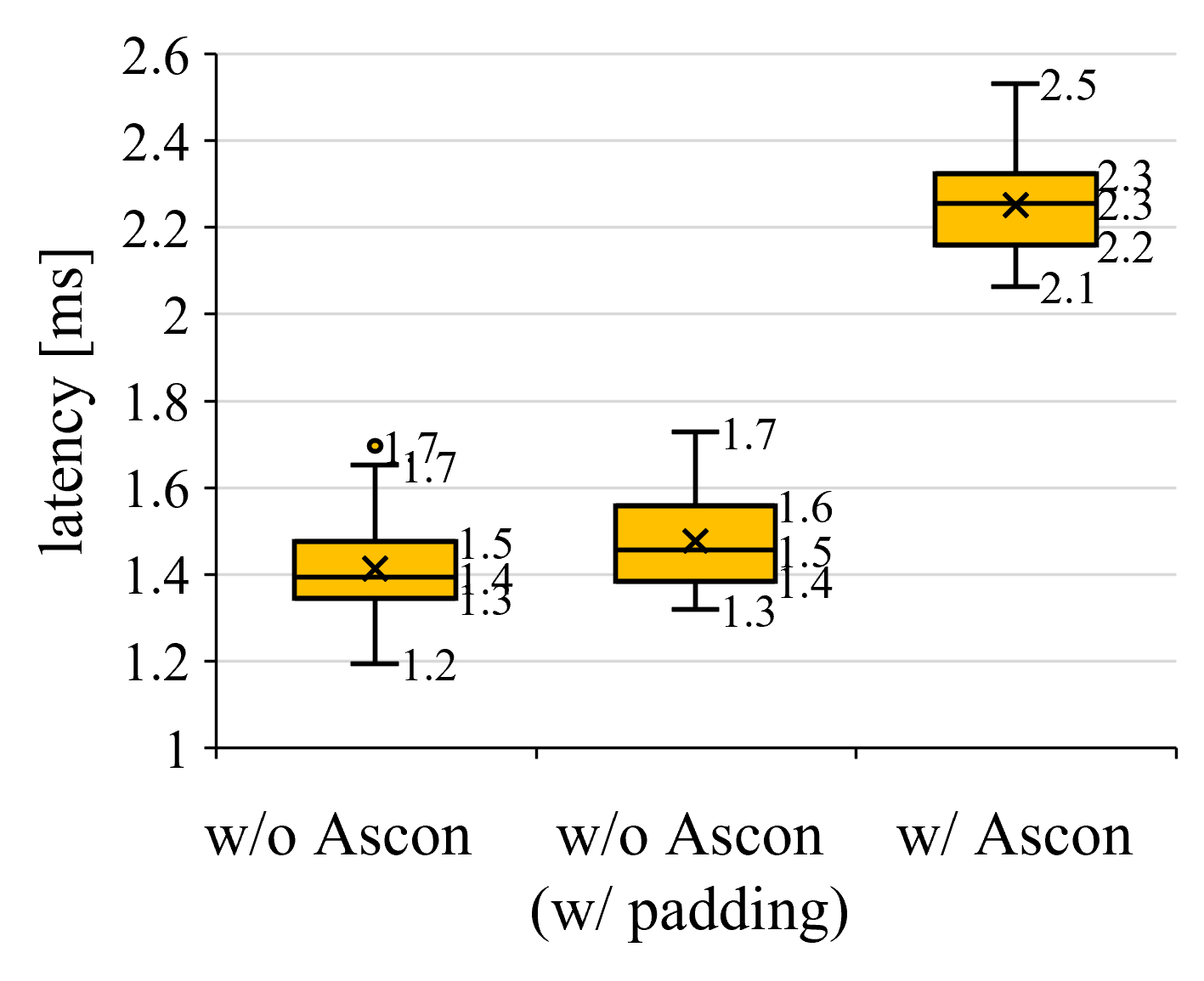
Figure 10 shows the measured communication latency. The middle result corresponds to communication with padding added so that the payload length is the same as that of the encrypted communication.
Secure communication introduced an implementation overhead of approximately 0.9 ms compared with unencrypted communication. Even so, the additional delay remained small compared with industrial demonstrations that target communication latencies below 4 ms using local 5G systems.
Protecting production know-how and preventing system stoppage caused by cyberattacks are essential in smart factories. The evaluation indicates that Ascon can provide confidentiality, integrity, and authenticity while preserving practical responsiveness.
Robot-pose information was no longer visible in captured network packets.
The authentication tag protects against tampering and impersonation.
The measured overhead remained small enough for the evaluated smart-factory scenario.
Lightweight cryptography must be evaluated not only through mathematical security but also through implementation security and application performance. Our work combines these perspectives by studying how lightweight cryptographic hardware can be attacked, how it can be protected, and how it behaves in real IoT systems.
Fault analysis clarifies realistic risks caused by clock-glitch injection.
RSM-based masking strengthens power-analysis resistance with a lightweight structure.
Ascon is evaluated in a functioning robot-arm IoT system rather than only in simulation.
Future research includes evaluating additional lightweight ciphers, more realistic fault-injection equipment, advanced side-channel attacks, combined fault and leakage attacks, optimized countermeasure circuits, and larger smart-factory systems with multiple devices and stricter real-time requirements.